7 Best Essential Oils for Sleep & Relaxation

Updated: 1 day ago
A good night’s sleep doesn’t always start the moment your head hits the pillow. Often, it begins much earlier: dimming the lights, putting your phone away and giving your body a few familiar signals that the day is coming to an end.
Essential oils can be a lovely part of that routine. Certain scents have traditionally been used to create a calmer atmosphere, while some essential oils have also been studied for their potential effects on relaxation, anxiety and sleep quality.
But which essential oils are best for sleep? Here are seven calming scents worth trying, plus simple ways to use them safely at bedtime.
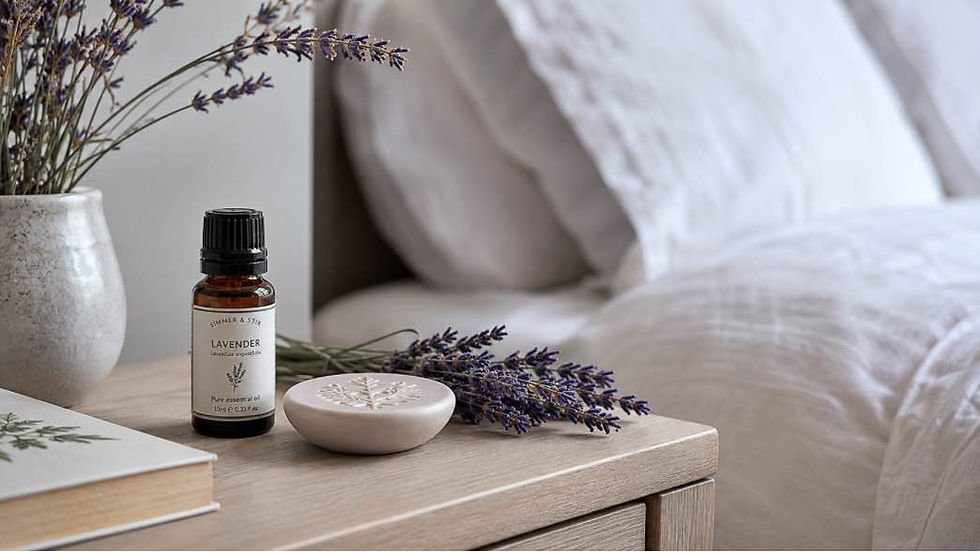
1. Lavender essential oil
Lavender is probably the best-known essential oil for sleep, and for good reason. Its soft floral scent is associated with relaxation and is one of the most researched essential oils in relation to sleep.
Lavender contains naturally occurring aromatic compounds including linalool and linalyl acetate. Research suggests that inhaling lavender aroma may help promote relaxation and improve certain aspects of sleep quality, although results vary between studies.
How to use it: Add a few drops to a diffuser before bed or place one drop on a tissue or aroma stone beside your bed.
2. Roman chamomile essential oil
Chamomile isn’t only for bedtime tea. Roman chamomile essential oil has a gentle, sweet, slightly fruity fragrance that works particularly well in an evening blend.
Its scent is softer than many herbal oils, making it a lovely choice if you find stronger essential oils overwhelming at bedtime.
Try combining Roman chamomile with lavender for a simple, comforting nighttime aroma.
3. Bergamot essential oil
Citrus might not be the first scent you associate with sleep, but bergamot is different. It has the freshness of citrus with a softer floral character, which makes it especially suited to relaxing blends.
Bergamot is often used in aromatherapy to create a calm, uplifting atmosphere and can be a good choice when you feel mentally busy at the end of the day.
Good to know: Some bergamot oils can make skin more sensitive to sunlight. If you’re using bergamot on the skin, choose a bergapten-free or FCF version and always dilute it properly.
4. Cedarwood essential oil
If floral fragrances aren’t your thing, cedarwood is worth trying. Its warm, woody scent feels grounding and combines beautifully with lavender, bergamot and frankincense.
Cedarwood is particularly nice during autumn and winter when you want your bedroom to feel cosy without using a sweet or heavily perfumed fragrance.
Try a bedtime diffuser blend of lavender and cedarwood for a simple starting point.
5. Clary sage essential oil
Clary sage has an earthy, herbaceous and slightly sweet fragrance. It is commonly used in relaxing aromatherapy blends and works especially well with lavender, bergamot and cedarwood.
The scent can be quite distinctive, so start with a small amount. One drop in a blend is often enough.
6. Frankincense essential oil
Frankincense has a warm, resinous aroma that lends itself beautifully to slow evening rituals.
Rather than thinking of frankincense as something that will simply “make you sleep”, use the fragrance as part of creating a quieter transition between your day and bedtime. It works particularly well alongside slow breathing, reading or meditation.
Blend it with lavender for something soft and calming, or cedarwood for a deeper woody fragrance.
7. Sweet marjoram essential oil
Sweet marjoram is perhaps less famous than lavender or chamomile, but it has a wonderfully warm herbal aroma.
Traditionally associated with relaxation, it can be a good addition to a bedtime blend if you enjoy herbal rather than floral fragrances. It combines particularly well with lavender and Roman chamomile.
How to use essential oils for sleep
You don’t need to use lots of essential oil to make your bedroom smell relaxing. In fact, more isn’t necessarily better.
A diffuser is one of the easiest options. Follow the instructions for your diffuser and use a small amount of essential oil. You can run it while you’re getting ready for bed rather than leaving it switched on throughout the night.
Another simple option is to add a drop of essential oil to an aroma stone, cotton pad or tissue and place it near your bed.
For something you can incorporate into your bedtime ritual, you could also make a diluted roller blend or pillow spray. Essential oils should be properly diluted before applying them to your skin, and they shouldn’t be applied undiluted directly to your pillow where they may come into contact with your eyes or skin.
3 essential oil blends to try before bed
Lavender & Cedarwood
3 drops lavender essential oil2 drops cedarwood essential oil
A simple woody-floral combination that feels warm and relaxing.
Chamomile & Lavender
2 drops Roman chamomile essential oil3 drops lavender essential oil
Soft, floral and particularly lovely when you want a gentle bedtime scent.
Bergamot & Frankincense
3 drops bergamot essential oil2 drops frankincense essential oil
A fresh but grounding combination for evenings when your mind still feels busy.
Adjust the number of drops to suit the size and instructions of your diffuser.
Create a simple bedtime scent ritual
Scent works particularly well when it becomes familiar. Instead of using a different essential oil every evening, choose one oil or blend that you enjoy and make it part of your regular routine.
Dim the lights, start your diffuser, make a cup of herbal tea and spend a little time away from screens. Over time, that familiar fragrance can become another cue that it’s time to wind down.
At Simmer & Stir, that’s really what these little rituals are about: using herbs, botanicals and natural fragrance to make ordinary moments feel a little more intentional.
Essential oil safety
Essential oils are highly concentrated, so use them sparingly. Never ingest essential oils unless specifically advised by an appropriately qualified healthcare professional, and always dilute them correctly before using them on the skin.
Take extra care around children and pets, as some essential oils that are suitable for adults may not be appropriate for them. If you’re pregnant, breastfeeding, have asthma or another medical condition, check with a qualified healthcare professional before using essential oils.
And remember: essential oils can be a pleasant addition to a relaxing bedtime routine, but they aren’t a treatment for persistent insomnia or other sleep disorders.
Frequently Asked Questions 7 Best Essential Oils for Sleep & Relaxation
What is the best essential oil for sleep?
Lavender is the most obvious place to start. It is widely used for relaxation and is also one of the better-studied essential oils in relation to sleep. Roman chamomile, bergamot and cedarwood are good alternatives.
Where should I put essential oils to help me sleep?
Try a diffuser, aroma stone or a single drop on a tissue placed near your bed. If you want to apply an essential oil to your skin, always dilute it appropriately in a carrier oil first.
Can I put lavender essential oil directly on my pillow?
It’s better not to drip concentrated essential oil straight onto the area where your face will rest. Instead, use a pillow spray made with an appropriate formulation or place a scented tissue or aroma stone beside the bed.
Can I leave an essential oil diffuser on all night?
Usually there’s no need. Diffusing for a short period while you wind down can be enough to fragrance the room. Always follow the manufacturer’s instructions for your particular diffuser.
Can I mix different essential oils for sleep?
Yes. Lavender combines particularly well with Roman chamomile, cedarwood, bergamot and frankincense. Start with a simple combination of two oils before experimenting with more complex blends.


Comments