How to Celebrate the Winter Solstice: 9 Simple Ideas for the Longest Night

The winter solstice is the shortest day and longest night of the year in the Northern Hemisphere. It marks the point when the days stop getting shorter and begin, slowly, to lengthen again. That simple shift makes it a lovely moment to notice the season, bring a little light into the house and create a quiet pause before Christmas and the rest of winter.
You do not need a complicated ceremony to celebrate it. A winter solstice evening can be as simple as lighting a candle, making something warm to drink and filling the room with the scent of orange, rosemary and spice. Here are 9 easy ways to make the longest night feel intentional without turning it into a big production.

What is the winter solstice?
The winter solstice happens when one of the Earth's poles reaches its maximum tilt away from the sun. In the Northern Hemisphere it falls in December and gives us the fewest hours of daylight of the year. After the solstice, daylight begins to increase again, which is why the idea of returning light has become such a natural theme for midwinter celebrations.
1. Light a candle at sunset
Start simply. Light a candle when the daylight fades and let it mark the transition into the evening. You might use one candle on the table, a group of small candles in glass holders, or battery candles if you prefer. The point is less about ceremony and more about noticing the darkness and bringing in a little warmth.
2. Make a winter solstice simmer pot
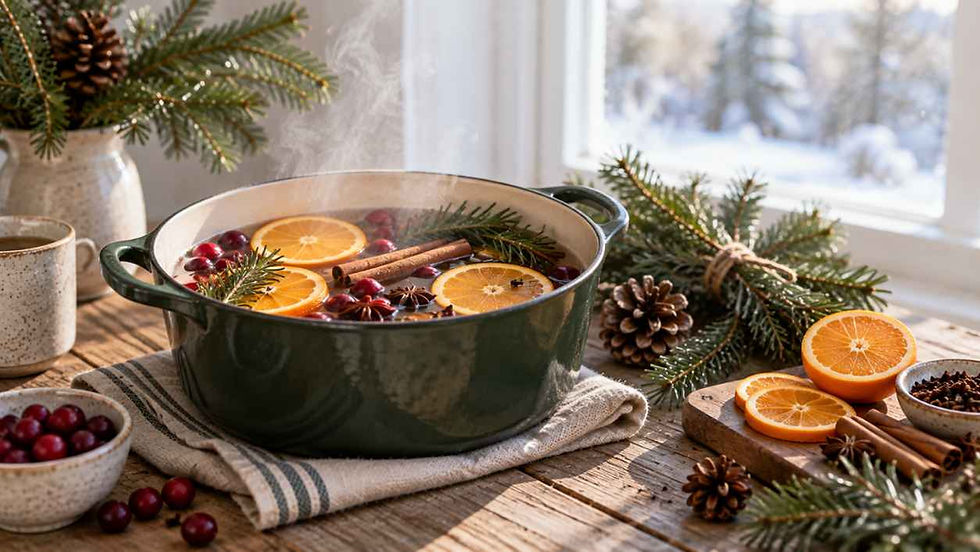
A simmer pot is one of the easiest ways to give the evening a seasonal scent. Try orange peel, rosemary, cinnamon and star anise for a bright, spicy blend, or use pine, juniper and dried citrus for something fresher and more forest-like. Keep the pan topped up with water and never leave it unattended.
3. Bring evergreen branches indoors
Evergreen branches are one of the simplest natural decorations for midwinter. A few sprigs of pine, fir or rosemary in a vase are enough. You can also combine them with dried orange slices, pinecones or a plain ribbon for a restrained seasonal arrangement.
4. Step outside after dark
The longest night is a good reason to actually experience the darkness rather than immediately switching on every light. Take a short walk, stand in the garden for a few minutes or look up at the winter sky. It turns an astronomical event into something you can feel rather than simply read about.
5. Make a warming seasonal drink
Choose something slow and warming: herbal tea, spiced apple juice, a simple citrus drink or hot water infused with ginger and herbs. Serve it in a favourite mug and sit down properly for ten minutes instead of drinking it while doing three other things.
6. Use scent to mark the season
Natural fragrance can make the evening feel distinct from an ordinary December night. Dried orange peel, rosemary, cinnamon, cloves, pine and bay all work well in simmer pots and seasonal scent blends. Choose two or three rather than mixing everything together.
7. Make something with your hands
Dry orange slices, tie a small evergreen bundle, make a simple wreath or prepare a jar of simmer-pot ingredients for another evening. A small seasonal craft gives the solstice a physical marker without needing lots of supplies.
8. Look back before looking forward
The solstice sits naturally at the end of the year, so it can be a gentle moment to reflect. Write down one thing you want to leave behind, one thing you want more of and one thing you are grateful for. Keep it simple; this is not a productivity exercise.
9. Let the evening be quiet
Perhaps the most useful winter solstice tradition is simply allowing the longest night to feel like the longest night. Dim the lights, put your phone away for a while, light a candle and enjoy an evening that does not need to be filled.
Winter solstice traditions without the pressure
Many winter solstice traditions centre on light, greenery, warmth, food and gathering. You can borrow the parts that feel natural to you without recreating a historical celebration or following a particular spiritual path. Think of the solstice as a seasonal marker: a reason to notice where you are in the year and make home feel especially calm and welcoming.
Frequently asked questions
When is the winter solstice?
In the Northern Hemisphere it falls in December, usually around 21 December, although the exact astronomical time varies by year and location.
What do people do for the winter solstice?
Common modern ideas include lighting candles, gathering with others, bringing in evergreens, preparing seasonal food and drinks, spending time outdoors and creating personal rituals around the returning light.
Can I celebrate the winter solstice at home?
Absolutely. A candle, a warm drink, a simmer pot and a quiet evening are enough to make the day feel different from an ordinary winter night.
Is the winter solstice the same as Yule?
They are closely connected but not identical. The solstice is an astronomical event, while Yule refers to historical and modern seasonal traditions associated with midwinter.
What scents work well for the winter solstice?
Orange, rosemary, pine, juniper, cinnamon, clove, bay and star anise all work beautifully in winter home-fragrance blends.
More seasonal inspiration
Next, explore a winter solstice simmer pot, simple solstice rituals and the plants and botanicals associated with midwinter. Together they create an easy, natural way to mark the season at home.
Seasonal inspiration in your inbox
Get new recipes, botanical ideas and natural ways to make home feel warm and seasonal, from simmer pots and potpourri to herbal drinks and small seasonal rituals.


Comments