Natural Autumn Home Fragrance: 7 Ways to Make Your Home Smell Amazing

Updated: Sep 4
As the days grow shorter and the air turns cooler, home fragrance starts to feel especially comforting. But creating an autumn scent at home does not have to mean reaching for a heavily perfumed candle or synthetic room spray. Herbs, citrus, spices and essential oils can all be used in simple ways to make your home smell warm, fresh and seasonal.
In this guide, you’ll find seven natural home fragrance ideas for autumn, from simmer pots and reed diffusers to potpourri, room sprays and scented sachets. Use one method on its own or combine a few depending on the room and the mood you want to create.
What does “home fragrance” actually mean?
Home fragrance is a broad term for anything used to add scent to a room. It can include sprays, reed diffusers, simmer pots, wax melts, potpourri and scented sachets. Some methods give a quick burst of fragrance, while others work slowly in the background.
If you like a steady, low-maintenance scent, our DIY reed diffuser recipe is a good place to start. For something more seasonal and immediate, a simmer pot or autumn potpourri can be a lovely alternative.
7 natural home fragrance ideas for autumn
1. Make an autumn simmer pot with apple, orange and cinnamon
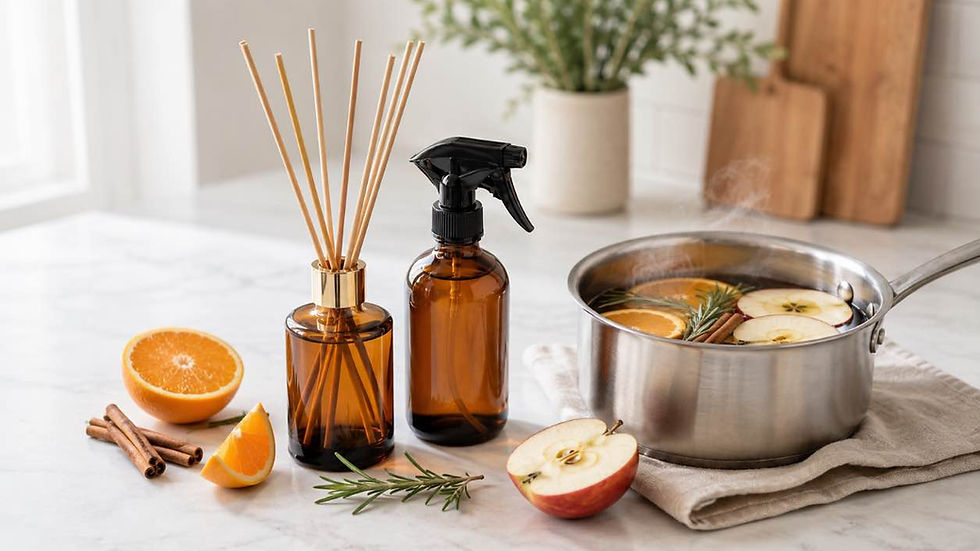
A simmer pot is one of the easiest ways to scent a room naturally. Add sliced apple, orange, a cinnamon stick and a small sprig of rosemary to a saucepan, cover with water and bring it gently to a simmer.
Keep the heat low, top up the water when needed and never leave the pan unattended. The steam carries the fragrance through the room without the need for a plug-in diffuser or aerosol spray.
For more combinations, see our guide to natural simmer pot recipes.
2. Make a simple autumn room spray
A room spray is useful when you want fragrance quickly, especially in a hallway, guest room or living room. A simple homemade version can be made with distilled water, a small amount of high-proof alcohol or a suitable solubiliser, and a few drops of essential oil.
For autumn, try combinations such as sweet orange with cedarwood, bergamot with rosemary, or lavender with a touch of frankincense. Always shake before use, avoid spraying directly onto delicate fabrics or polished surfaces, and keep essential-oil sprays away from pets and small children.
3. Use a reed diffuser for slow, steady fragrance
Reed diffusers work especially well in spaces where you want a gentle scent throughout the day. They do not need heat, and once set up they require very little attention beyond turning the reeds occasionally.
If you want to make your own, follow our DIY reed diffuser recipe with essential oils. For autumn, woody and citrus notes such as cedarwood, sweet orange, bergamot and frankincense work particularly well together.
4. Create modern autumn potpourri
Potpourri does not need to look old-fashioned. Keep the mix simple and use a restrained colour palette: dried apple peel, orange slices, rosemary, a few rose petals and one or two pieces of cinnamon are enough.
Start with our practical guide to making potpourri at home.
For a distinctly seasonal version, try our autumn equinox potpourri.
5. Make a scented sachet for wardrobes and drawers
Small cotton or muslin sachets are ideal for places where a simmer pot or diffuser is not practical. Fill them with fully dried lavender, rosemary, cedar chips or citrus peel and tuck them into a drawer, wardrobe or linen cupboard.
For a warmer autumn scent, add a little dried orange peel and a tiny piece of cinnamon bark. Keep everything completely dry to avoid mould.
6. Try wax melts for a stronger autumn scent
If you prefer a stronger fragrance, homemade wax melts are another option. Pumpkin spice-style blends work particularly well in autumn, but you can keep them more botanical by using orange, clove, cinnamon leaf or woody essential oils in modest amounts.
For inspiration, see our pumpkin spice wax melts and sachets.
7. Build your own autumn scent combination
Once you understand the basic scent families, it becomes much easier to create a blend that feels like your own home rather than a generic seasonal fragrance.
Use citrus such as orange or bergamot for freshness, rosemary or bay for a green herbal note, cinnamon or cardamom for warmth, and cedarwood or frankincense for a deeper base. Lavender and rose can soften a blend if you prefer something less spicy.
If you are using essential oils, our guide to mixing essential oils explains scent families, simple ratios and beginner-friendly blends.
How to make autumn home fragrance feel modern
Autumn fragrance can easily become very sweet or heavy. If you prefer a fresher feel, use fewer ingredients and balance warm spices with citrus or green herbs. One cinnamon stick often does more than three, and a sprig of rosemary can stop an orange-and-spice blend from smelling too much like a Christmas candle.
The same principle applies visually. Amber glass, clear bottles, simple ceramic bowls and natural cotton sachets feel cleaner and more contemporary than heavily decorated containers.
Which method is best for each room?
A reed diffuser works well in a hallway, bathroom or home office because the scent is steady and unobtrusive. A room spray is useful when you want a quick refresh before guests arrive. Simmer pots are best for kitchens and open-plan living spaces, while potpourri and sachets are good choices for shelves, bedrooms, drawers and wardrobes.
You do not need to fragrance every room at once. One or two subtle scent sources usually feel more pleasant than several strong fragrances competing with each other.
A note on essential oil safety
Natural does not automatically mean harmless. Essential oils are highly concentrated, so use them sparingly and follow the manufacturer’s guidance. Avoid spraying them directly onto skin, food surfaces or delicate furnishings unless the recipe is specifically designed for that purpose.
If you have pets, young children, asthma or fragrance sensitivities in the household, check whether the oils you plan to use are suitable before diffusing or spraying them indoors. Good ventilation still matters, even when you are using natural ingredients.
Frequently asked questions about autumn home fragrance
1. What is the easiest natural way to make my home smell good in autumn?
A simmer pot is one of the easiest options because you can make one with ingredients you may already have, such as apple, orange, cinnamon and rosemary. A reed diffuser is better if you want something that works quietly in the background for several days.
2. How can I make my house smell autumnal without candles?
Try a simmer pot, reed diffuser, room spray, dried potpourri or scented sachet. All of these can create an autumn atmosphere without burning a candle.
3. What essential oils smell like autumn?
Sweet orange, bergamot, cedarwood, frankincense, clove, cinnamon leaf and cardamom can all work well in autumn blends. Use spicy oils very sparingly because they can quickly overpower a mixture.
4. Can I use fresh herbs in homemade home fragrance?
Yes, fresh rosemary, thyme, bay and mint work well in simmer pots. For potpourri, sachets and dry blends, herbs and citrus peel need to be completely dried first to reduce the risk of mould.
5. How long does homemade home fragrance last?
It depends on the method. A room spray gives an immediate but short-lived scent, a simmer pot lasts while it is gently heated, and a reed diffuser can fragrance a room for weeks. Potpourri and sachets gradually fade and can often be refreshed with one or two drops of a suitable essential oil.


Comments