Spiritual Cleansing Bath: Herbs, Ingredients & Rituals

Updated: Sep 4
A spiritual cleansing bath is less about following a perfect recipe and more about creating a deliberate pause. Warm water, herbs, salt and a few quiet minutes can turn an ordinary bath into a simple ritual for reflection, release and a fresh start.
Across different cultures and traditions, plants have long carried symbolic meanings. Rosemary is often associated with cleansing and protection, rose with love and compassion, lavender with peace, and citrus with brightness and renewal. You do not have to follow any one spiritual tradition to enjoy the ritual. Think of the ingredients as prompts for intention rather than as ingredients with guaranteed powers.
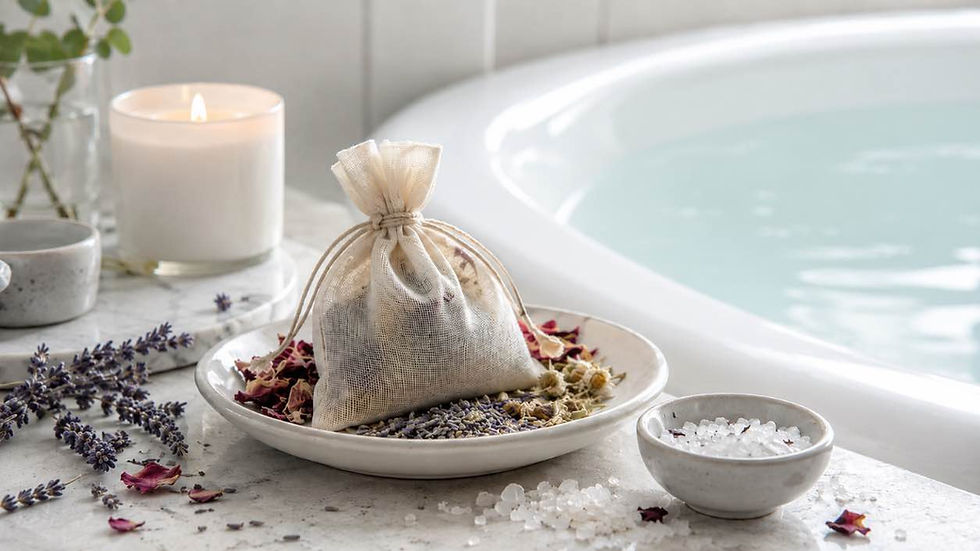
People sometimes search for a “spiritual healing bath”. In this article, healing is used only in the personal or symbolic sense: a bath can support a feeling of rest, reflection or emotional reset, but it is not a treatment for a health condition.
What is a spiritual cleansing bath?
A spiritual cleansing bath is a bath prepared with intention. You might take one after a stressful week, before a new beginning, during a seasonal reset, or simply when you want to create a little space between yourself and the noise of everyday life.
The ritual can be very simple. Choose a few herbs or flowers that fit the mood you want to create, add salt if you like, place loose botanicals in a reusable linen or muslin bag, and let the warm water draw out their colour and scent. The important part is the pause you create around it.
If you are new to using botanicals this way, our guide to what a herb sachet is and how to use one explains why a small fabric bag is such a practical way to keep petals and leaves out of the plughole.
Spiritual bath ingredients: what to use and what they symbolise
You do not need a cupboard full of herbs. Two or three well-chosen ingredients are usually enough. Start with the intention behind the bath, then choose botanicals whose traditional symbolism or fragrance suits that mood.
Rosemary: cleansing, protection and fresh starts
Rosemary has a long history in household and ceremonial traditions and is often associated with purification, remembrance and protection. Its sharp, green scent also makes a bath feel fresh rather than overly floral.
Use a small handful of dried rosemary in a bath sachet, especially for a “reset” ritual. If rosemary is one of your favourite herbs, you can also explore its everyday uses in our guide to rosemary for hair, skin and wellbeing.
Lavender: peace, rest and release
Lavender is one of the easiest herbs to use for an evening ritual. Traditionally it is associated with calm, peace and cleansing, while its familiar scent naturally suits a quiet bath before bed.
A tablespoon or two of dried culinary or cosmetic-grade lavender is plenty. For a more salt-focused recipe, see our DIY lavender bath salts.
Rose: love, compassion and self-care
Rose petals are commonly connected with love, tenderness and beauty rituals. In a spiritual bath, that can be interpreted less as romance and more as self-kindness, forgiveness or creating a gentler atmosphere around yourself.
Use dried, unsprayed rose petals in a sachet rather than scattering them loose through the bath. You get the visual and aromatic pleasure without having to scoop petals out afterwards.
Chamomile: peace and gentle reflection
Chamomile is traditionally associated with peace, comfort and rest. Its soft apple-like fragrance works particularly well with lavender, rose or lemon balm for a quiet evening bath.
Hibiscus: vitality, confidence and warmth
Hibiscus brings a deeper floral note and a beautiful pink-red tone to herbal blends. Symbolically it is often linked with passion, vitality and personal confidence. Because hibiscus can release quite a lot of colour, keep it contained in a sachet and use only a modest amount.
Citrus peel: renewal, brightness and new beginnings
Dried lemon, orange or grapefruit peel is a lovely choice when you want a ritual that feels uplifting rather than sleepy. Citrus is often associated with brightness, clarity and renewal, making it a natural partner for rosemary or hibiscus.
Always use fully dried peel rather than pieces of fresh fruit. Fresh fruit adds unnecessary juice, sugar and pulp to the bathwater.
Lemon balm and mint: clarity and refreshment
Lemon balm has a soft lemony scent and traditionally appears in calming herbal preparations, while mint gives a sharper, more refreshing feel. Either can work well in a daytime bath when you want something that feels clear and light.
For more ideas on choosing familiar botanicals, have a look at our guide to 12 everyday herbs for natural wellness.
Salt: purification and grounding
Salt appears in many cleansing traditions and is often used symbolically to represent purification, boundaries and grounding. Epsom salt is popular in modern bath recipes because it dissolves easily, but ordinary sea salt can also be used in small amounts if that is what you have.
There is no need to make medical claims about the salt. In this kind of ritual, its role is simply part sensory and part symbolic.
Colloidal oatmeal: a gentle, skin-friendly base
What is colloidal oatmeal?
Colloidal oatmeal is simply oats that have been milled into an extremely fine powder, so they disperse through bath water instead of floating around as flakes. You will often see it in bath and skincare products because it gives the water a soft, milky feel.
For this recipe, look for cosmetic-grade colloidal oatmeal rather than ordinary porridge oats. Blending oats at home usually leaves them much coarser. And if you do not have colloidal oatmeal, you can simply leave it out — it is an optional part of the bath sachet, not essential to the ritual.
Oatmeal is not essential to the spiritual side of the ritual, but it can be a very useful practical ingredient. Finely milled colloidal oatmeal disperses through bathwater and gives it a softer, milkier feel.
If you use ordinary ground oats rather than true colloidal oatmeal, place them inside the bath sachet. This keeps the bath much easier to clean and prevents oat particles collecting around the drain.
Choose herbs based on your intention
Instead of putting every herb you own into one bath, choose a small combination with a clear theme. These are suggestions, not rules.
For cleansing and protection
Try rosemary with dried lemon peel and a little salt. This combination feels fresh and purposeful and works well when you want to mark the end of a difficult period or create a sense of a clean slate.
For calm and letting go
Combine lavender, chamomile and a spoonful of colloidal oatmeal. Keep the lighting low, leave your phone outside the bathroom and treat the bath as a quiet transition into the evening.
For love and self-compassion
Rose petals with lavender or chamomile create a soft floral blend. Rather than focusing on attracting something from outside yourself, you can use the ritual as a reminder to be a little kinder to yourself.
For renewal and energy
Try hibiscus, dried orange peel and a little rosemary. The colour and citrus notes give this bath a brighter, more energising character and make it a lovely choice for the start of a new month or season.
How to make a simple spiritual bath sachet
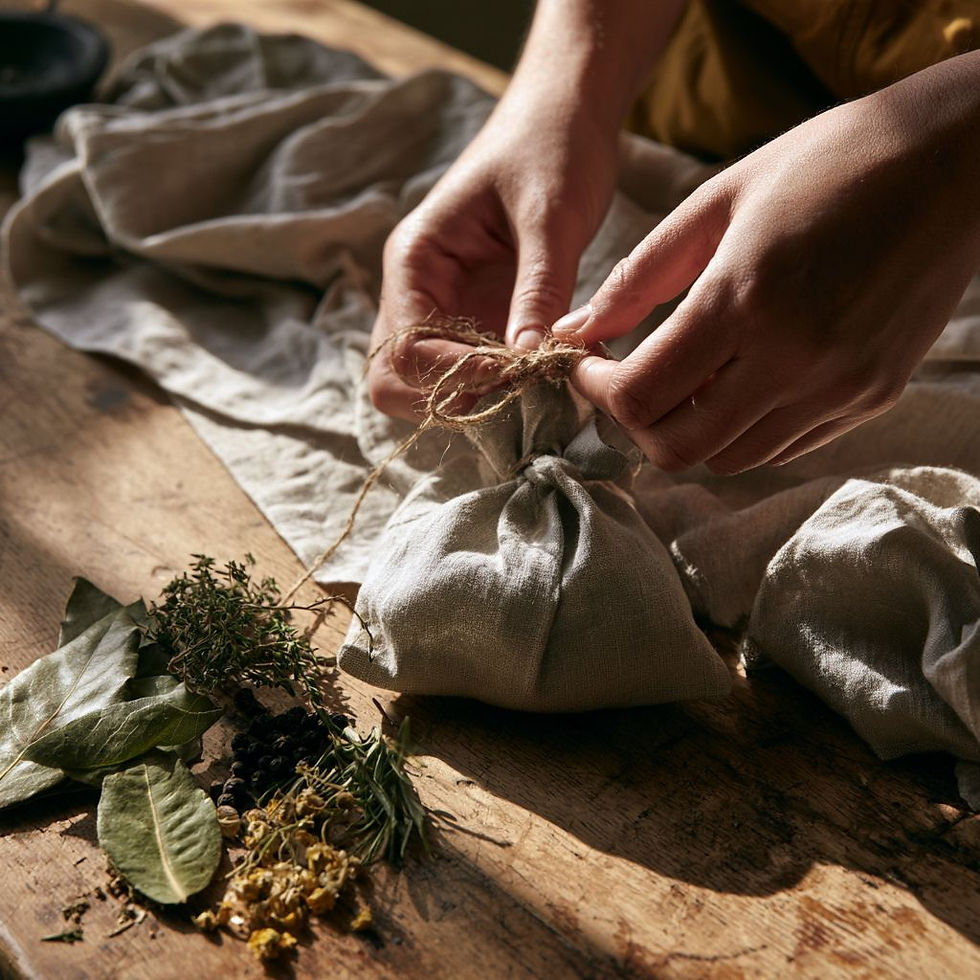
A fabric bath sachet is the easiest way to use flowers and herbs without creating a clean-up job afterwards. Linen, cotton muslin or another loosely woven natural fabric works well because warm water can move through it easily.
What you need
1 reusable linen or muslin bath bag
1/2 cup Epsom salt or sea salt
2 tablespoons colloidal oatmeal, optional
2 to 4 tablespoons dried herbs, flowers or citrus peel
A bowl and spoon for mixing
Choose two or three botanicals from the sections above. You do not need more than that for a fragrant, visually interesting blend.
How to use it
Mix the salt, oatmeal and dried botanicals in a clean bowl.
Spoon the mixture into your bath bag and tie it securely.
Hang or hold the sachet under the warm running tap while the bath fills.
Once the bath is ready, place the sachet in the water and gently squeeze it from time to time, just as you would steep an oversized tea bag.
Remove the sachet before draining the bath. Empty, rinse and dry a reusable bag thoroughly before storing it.
How to turn the bath into a simple ritual
The ingredients are only one part of the experience. A spiritual bath becomes meaningful because you give it your attention.
Before the bath
Tidy the bathroom, dim the lights and decide what the bath is for. Your intention can be as simple as “I am ready to leave this week behind” or “I want twenty quiet minutes before I start again tomorrow”.
You can light a candle, put on music or write your intention in a notebook, but none of these things are required. Avoid turning the ritual into another checklist you have to get right.
During the bath
Take a few slow breaths and notice the warmth, scent and colour of the water. If your mind is busy, return to the intention you chose before getting in. Some people like to visualise the water carrying away what they no longer need; others simply sit quietly.
After the bath
Drain the bath, rinse the sachet if it is reusable, drink a glass of water and give yourself a few minutes before returning to screens or chores. If you journal, this can be a nice moment to write down anything that came up during the ritual.
No bath? Try a foot bath or shower sachet
You can still create the same sense of ritual without a bathtub. Use a smaller amount of the blend in a warm foot bath, or hang a herb sachet away from the direct spray in the shower so that warm steam carries some of the aroma.
A foot bath works particularly well with rosemary, lavender or citrus peel and can still provide the pause and intention that make the ritual meaningful.
A few practical safety notes
Use herbs and flowers that are clean, correctly identified and suitable for cosmetic or culinary use. Avoid plants that have been sprayed with pesticides or collected from roadsides.
Do not add undiluted essential oils directly to bathwater. Oil and water do not mix, so concentrated droplets can remain on the surface and come into direct contact with skin. If you want to use essential oils, follow appropriate bath-safe dilution guidance for the specific oil and avoid them altogether if you are unsure.
If you have sensitive skin, allergies, are pregnant, or have a skin condition, check individual ingredients before use. Stop if anything feels irritating. The ritual should feel gentle, not challenging.
Frequently asked questions about spiritual cleansing baths
1. What are the best herbs for a spiritual cleansing bath?
Rosemary, lavender, rose and chamomile are easy starting points because they are familiar, widely available and have long histories of symbolic use. Choose according to the mood or intention you want rather than trying to use as many herbs as possible.
2. What can I put in a spiritual bath for cleansing and protection?
A simple combination is rosemary, dried lemon peel and salt. Rosemary and salt are traditionally associated with cleansing and protection, while citrus brings a feeling of freshness and renewal. These meanings are symbolic rather than guarantees of a particular outcome.
3. Can I use oatmeal in a spiritual bath?
Yes. Colloidal oatmeal is a practical addition when you want the bathwater to feel softer and more comforting. It does not need to have a spiritual meaning to belong in the blend. If you use ground oats, keep them inside a fabric sachet to make clean-up easier.
4. How often should you take a spiritual cleansing bath?
There is no fixed schedule. Some people enjoy one at the new moon, the beginning of a month or after a stressful event; others simply take one whenever they need a quiet reset. The ritual is more useful when it feels intentional rather than compulsory.
5. Can I use fresh herbs instead of dried herbs?
You can use some fresh herbs, but dried botanicals are generally easier to measure, store and contain in a sachet. Fresh rosemary, mint or lemon balm can work well if they are clean and unsprayed. Avoid fresh citrus slices because they add juice and pulp to the water; dried peel is a neater option.
A simple ritual, not a rulebook
A spiritual cleansing bath does not need rare ingredients, crystals or an elaborate ceremony. A handful of herbs, a linen sachet and a clear intention can be enough. Choose plants that are meaningful to you, keep the practical side simple, and let the bath be what it is meant to be: a quiet space to reset.


Comments