7 Autumn Simmer Pot Recipes for a Cosy, Naturally Fragranced Home

Updated: 2 days ago
There is something wonderfully comforting about a pan of apple, citrus and herbs gently steaming on the hob. An autumn simmer pot is a simple way to make your home smell warm and seasonal without relying on a heavily perfumed candle or aerosol spray.
Below you will find seven autumn simmer pot recipes, from classic apple and cinnamon to fresher woodland and citrus combinations. Each one uses everyday ingredients and can be adjusted to suit the size of your pan and the strength of fragrance you prefer.
If you would like to explore other ways to fragrance your home naturally, start with our natural autumn home fragrance ideas.
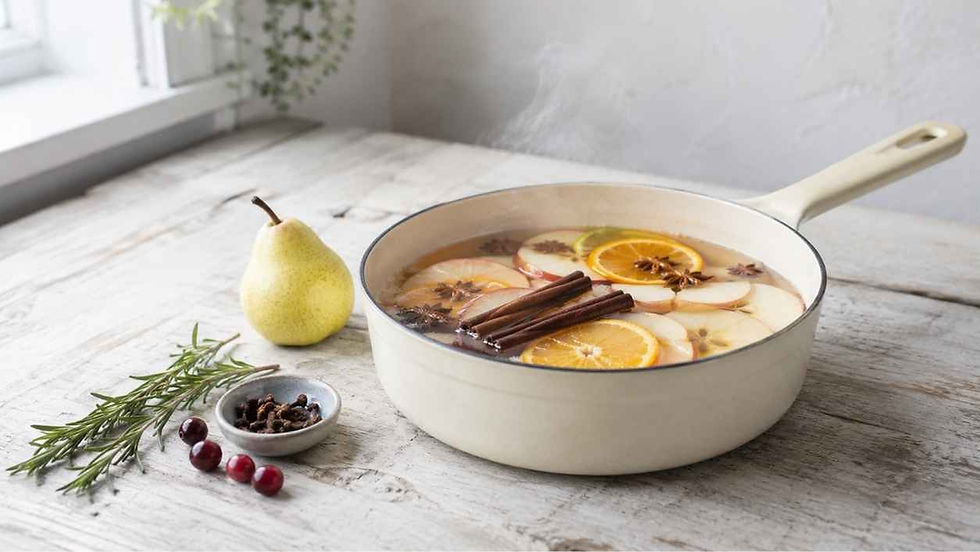
What is an autumn simmer pot?
A simmer pot, sometimes called stovetop potpourri, is a saucepan of water filled with aromatic fruit, herbs and spices. As the water warms, steam carries their scent into the room. Unlike dry potpourri, the ingredients stay in water and are heated only while you are nearby.
The method is flexible. Fresh apple and citrus provide a fruity base, herbs add a green note, and whole spices bring warmth. You do not need a long ingredient list: three or four well-chosen ingredients usually smell cleaner and more balanced than a crowded pan.
How to make a simmer pot
Place the ingredients in a small or medium saucepan and add 750 ml to 1 litre of water, or enough to cover everything comfortably. Bring the water just to the boil, then immediately reduce the heat to the lowest setting so it barely simmers.
Keep the lid off, check the water regularly and top it up before the ingredients become exposed. Most blends can be gently heated for one to three hours. Never leave a simmer pot unattended, and switch off the hob when you leave the room.
A slow cooker can also be used on its lowest setting with the lid off, provided you follow the appliance instructions and continue to monitor the water level.
7 autumn simmer pot recipes
1. Classic apple, orange and cinnamon
Use 1 small apple, sliced; the peel or 3 slices of 1 orange; 1 cinnamon stick; and 1 small sprig of rosemary. Cover with water and simmer very gently.
This is the familiar cosy autumn combination, but rosemary keeps it from becoming overly sweet. For a lighter result, use orange peel rather than several whole slices.
2. Pear, cardamom and vanilla
Use 1 ripe pear, sliced; 4 lightly crushed cardamom pods; 1 strip of lemon peel; and 1 teaspoon of vanilla extract added to the water.
Pear creates a softer fruit note than apple, while cardamom feels warm without smelling strongly of Christmas. Add the vanilla sparingly: too much can overpower the fresh pear and lemon.
3. Rosemary, bay and lemon woodland simmer pot
Use 2 small rosemary sprigs, 2 bay leaves, 3 strips of lemon peel and 4 lightly crushed juniper berries if available. Cover with water and heat gently.
This blend is green, fresh and slightly woody, making it a good choice if you do not enjoy sweet or spicy home fragrance. Use culinary bay leaves and correctly identified ingredients only.
4. Cranberry, orange and clove
Use 100 g fresh or frozen cranberries, 3 orange slices, 1 cinnamon stick and 3 whole cloves. The cranberries are mainly visual and gently tart; orange and clove provide most of the fragrance.
Clove becomes strong quickly, so begin with three rather than adding a whole handful. For a less festive version, replace the cinnamon with a sprig of thyme.
5. Apple, fresh ginger and thyme
Use 1 small apple, sliced; 4 thin slices of fresh ginger; 2 small thyme sprigs; and 2 strips of lemon peel.
This combination smells fresh, lightly spicy and herbal. It works particularly well in the kitchen after cooking, although ventilation should always come first rather than using fragrance to cover unwanted smells.
6. Cosy citrus and chai spice
Use the peel of 1 orange, 3 cardamom pods, 1 small cinnamon stick, 2 slices of fresh ginger and 1 star anise.
This is the richest blend in the collection. Keep the quantities modest and omit the star anise if you prefer a cleaner citrus scent. A strip of lemon peel can brighten the mixture further.
7. Apple, lemon and chamomile
Use 1 small apple, sliced; 3 strips of lemon peel; 1 tablespoon of dried culinary chamomile; and 1 very small rosemary sprig.
Chamomile gives a gentle hay-like, apple-soft scent rather than a strong floral perfume. Place loose chamomile in a reusable tea infuser if you want to make cleaning the pan easier.
How to create your own autumn scent combination
Choose one fruity ingredient, one herb and one warm accent. Apple with rosemary and cinnamon is a reliable starting point; pear with thyme and cardamom is softer; lemon with bay and juniper is fresher and more woodland-like.
Think in layers rather than adding everything at once. Citrus provides the bright first impression, herbs form the green middle, and spices or woody ingredients create depth. Begin with small amounts, let the blend warm for 15 minutes and adjust only if needed.
For more on balancing scent families, read How to Mix Essential Oils. The principles are useful even when you are combining whole botanicals rather than oils.
Can you reuse a simmer pot?
You can usually cool the pan, cover it and refrigerate it until the next day, then reheat it once. Discard it sooner if the water looks cloudy, the fruit has broken down heavily or the mixture smells stale. Do not leave a used simmer pot sitting at room temperature overnight.
These recipes are intended for home fragrance, not drinking. Once ingredients have simmered for a long time and been left to cool, treat the mixture as used potpourri rather than a beverage.
Simmer pot safety
Never leave a pan unattended or allow it to boil dry. Keep handles turned inwards and keep the hob, hot water and ingredients away from children and pets. Use good ventilation and stop if anyone in the household experiences irritation, headache or breathing discomfort.
If you share your home with pets, check each ingredient with a reliable veterinary source before use. An ingredient being natural or culinary does not automatically mean that concentrated airborne fragrance suits every animal.
Prefer a fragrance method that does not use heat? Try making potpourri at home or use a simple dried herb sachet.
Enjoy creating your own natural home fragrance? Explore the printable recipe cards and fragrance journal in the Botanical Blueprint shop.
Frequently asked questions about autumn simmer pots
1. What can I put in an autumn simmer pot?
Apple, pear, orange peel, lemon peel, rosemary, thyme, bay, fresh ginger and whole spices are all useful options. Start with three or four ingredients so the fragrance stays balanced.
2. How long should I simmer a simmer pot?
One to three hours is usually enough, provided you remain nearby and keep topping up the water. The scent often becomes noticeable within 15 to 30 minutes.
3. Can I use old fruit in a simmer pot?
Slightly soft but otherwise sound fruit is fine. Do not use mouldy, fermented or badly spoiled ingredients, as heating them will not make them suitable.
4. Can I make a simmer pot without cinnamon?
Yes. Try lemon with rosemary and bay, apple with ginger and thyme, or pear with cardamom. Autumn fragrance does not have to be sweet or cinnamon-heavy.
5. Can I leave a simmer pot on overnight?
No. Switch it off when you leave the room and never leave it heating while you sleep. Cool and refrigerate the pan if you want to reuse it the following day.


Comments