Herbal Bath Sachets: An Easy Botanical Bath DIY

Updated: Sep 4
Love the idea of a herbal bath but not the trail of petals, leaves and stems left behind afterwards? A bath sachet is one of the easiest ways to enjoy botanicals in the bath without turning clean-up into part of the ritual. You simply place your chosen dried herbs, flowers and other bath ingredients inside a small cotton or linen bag, then let warm water flow through it.
New to bath salts? Start with our complete beginner’s guide to making and using bath salts.
If you are new to this kind of DIY, it helps to think of a bath sachet as a large herbal tea bag for the bath. You can also read our guide to what a herb sachet is and how it can be used around the home. The beauty of the bath version is that it is simple, adaptable and easy to make with ingredients you may already have.

What is a herbal bath sachet?
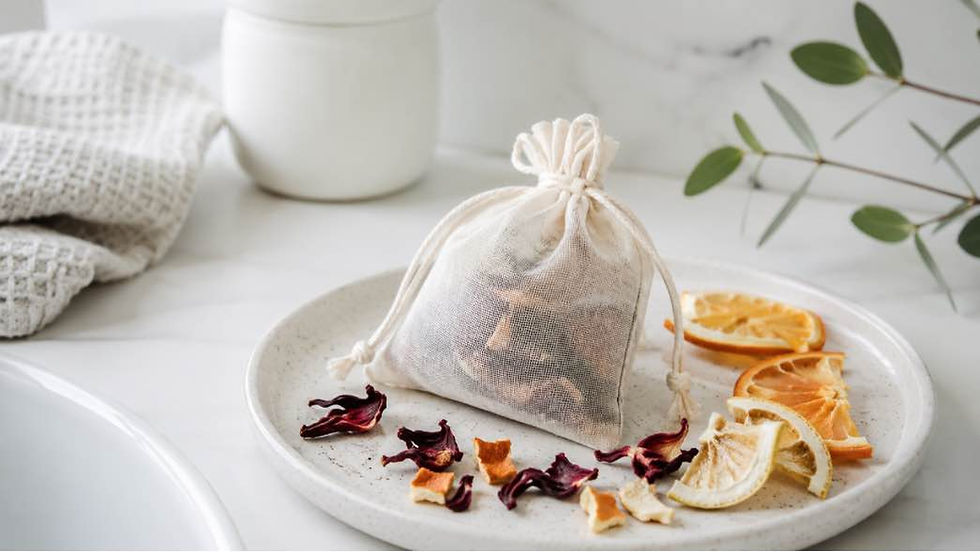
A herbal bath sachet is a small porous bag filled with dried botanicals and, if you like, ingredients such as Epsom salt or colloidal oatmeal. The fabric keeps the larger pieces contained while allowing warm bath water to circulate through the contents. You still get the colour, aroma and sensory experience of a botanical bath, but without handfuls of herbs floating around the tub.
Natural cotton muslin and linen are both practical choices because water can move through them easily. A drawstring bag is especially handy if you plan to make bath sachets regularly, as it can usually be emptied, washed and reused.
Why use a bath sachet instead of loose herbs?
Loose petals look beautiful in photographs, but in a real bath they can cling to the sides of the tub, collect around the plug and make rinsing everything down afterwards surprisingly fiddly. A sachet gives you the same botanical feel in a more practical format.
Keeps dried herbs and petals together
Makes the bath easier to clean afterwards
Lets you prepare blends ahead of time
Works well for homemade gifts
Makes it easy to adjust ingredients for different moods and seasons
If you enjoy the ritual of bathing with plants, our guide to herbal bath benefits and traditions explores why this simple practice has remained popular for so long.
What can you put in a herbal bath sachet?
There is no single correct recipe. Start with one or two dried botanicals and build from there. Keeping the blend simple usually gives a nicer result than adding a little of everything.
Dried herbs and flowers
Lavender, chamomile, rose, rosemary, lemon balm, mint and calendula are all popular choices for home bath blends. Use botanicals that are clean, fully dried and suitable for topical use. If you are still exploring which plants you like, our guide to 12 everyday herbs is a useful starting point.
Bath salts
Epsom salt or a plain bath salt can add weight and texture to the sachet. If lavender is your main ingredient, you may also like our DIY lavender bath salts recipe.
Colloidal oatmeal
Colloidal oatmeal is very finely milled oatmeal made specifically to disperse in water and is commonly used in gentle bath and skincare products. It is not the same as tipping ordinary porridge oats into the bath. A spoonful or two can give a bath sachet a soft, milky feel.
Dried citrus peel
Dried orange, lemon or grapefruit peel adds a fresh botanical scent and looks lovely in homemade blends. Make sure the peel is thoroughly dried before storing it in a sachet.
Four easy bath sachet combinations
Lavender + chamomile
A soft floral blend that works beautifully for an evening bath. Combine equal parts dried lavender and chamomile with a little Epsom salt.
Rose + colloidal oatmeal
Pair dried rose petals with a spoonful of colloidal oatmeal for a gentle, simple blend with a romantic feel.
Rosemary + orange peel
A brighter, greener combination for mornings or days when you want your bath to feel fresh rather than sleepy.
Hibiscus + citrus
Dried hibiscus with orange and lemon peel creates a colourful seasonal blend. Use only a small amount of hibiscus because it can release plenty of colour into the water.
How to make a simple herbal bath sachet
What you need
1 small cotton muslin or linen drawstring bag
2 tablespoons dried herbs or flowers
2 to 4 tablespoons Epsom salt, optional
1 to 2 tablespoons colloidal oatmeal, optional
Method
Make sure every botanical ingredient is completely dry.
Mix the herbs, flowers and any salt or colloidal oatmeal in a clean, dry bowl.
Spoon the mixture into the fabric bag. Do not pack it too tightly; water needs to move through the contents.
Pull the drawstring closed securely.
Use straight away or store the dry sachet in an airtight container until bath time.
How to use a bath sachet
Place the sachet under the warm running tap while the bath fills, then drop it into the water and let it steep. Gently squeeze the bag a few times once it has absorbed water. This helps the infused water move through the botanicals.
You can leave the sachet in the bath while you soak. Just remember that natural ingredients can make surfaces slippery, particularly if your blend contains fine powders or oils.
Can you add essential oils?
You can, but they are not necessary. If you do use an essential oil, follow the supplier’s directions for bath use and do not drip concentrated essential oil straight onto the skin or directly into the bath. For a simple beginner-friendly sachet, dried botanicals alone are often enough.
Can you reuse a bath sachet?
The fabric bag itself can usually be reused once it has been emptied, washed and dried thoroughly. The wet botanical filling is best treated as a one-bath ingredient. Once herbs have been soaked in warm water they are no longer suitable for long-term storage.
Empty the used contents into your compost or household waste rather than leaving them sitting damp inside the bag. Rinse the sachet and allow it to dry completely before putting it away.
A few sensible safety notes
Botanical does not automatically mean suitable for every skin type. If you have sensitive skin, allergies or a known reaction to a plant family, choose ingredients carefully and patch test when appropriate. Stop using the bath if your skin becomes irritated.
If your bath is more about intention and ritual than fragrance, you may also enjoy our guide to creating a spiritual cleansing bath with herbs, salts and a simple bath sachet.
A practical note on wellness claims
Bath salts can make warm-water bathing feel more enjoyable, but they are not a medical treatment or a way to detox the body. Evidence for absorbing meaningful amounts of magnesium through the skin is limited. Treat these recipes as gentle self-care rituals and seek medical advice for persistent pain, skin problems or other symptoms.
Frequently asked questions about herbal bath sachets
1. What is the best fabric for a bath sachet?
Cotton muslin and linen are both good choices. The weave should be open enough for water to flow through but fine enough to keep larger herbs and petals contained.
2. Can I use fresh herbs in a bath sachet?
Fresh herbs can be used for a sachet you are going to put straight into the bath, but dried botanicals are much better for blends you want to prepare or store ahead of time.
3. How much should I put in one bath sachet?
A few tablespoons of botanicals plus any salt or oatmeal is usually plenty. Leave some space in the bag so the ingredients can move as water passes through them.
4. Can I make bath sachets as gifts?
Yes. Use completely dry ingredients, package the sachet in an airtight outer bag or jar, and include a simple ingredient list and instructions for use.
5. Do I need to rinse after a herbal bath?
That is largely personal preference. If your skin feels comfortable there is usually no need to make the ritual complicated, but a quick rinse can be helpful if you have used a particularly powdery or strongly coloured blend.
A simple way to make botanical baths easier
A herbal bath sachet takes only a few minutes to prepare, but it makes a botanical bath much more practical. Start with a small, simple blend, notice which ingredients and aromas you enjoy, then adjust the next sachet to suit the season or the kind of evening you want to create.

Comments