Winter Solstice Plants & Botanicals: 9 Natural Symbols of Midwinter

Winter solstice plants and botanicals are often less about flowers and more about what remains vivid in the darkest part of the year: evergreen branches, glossy leaves, berries, aromatic herbs, citrus and warming spices.
These nine materials work beautifully in simple seasonal decorations, simmer pots and scent blends. Their meanings vary between cultures and traditions, so think of the notes below as broad seasonal associations rather than fixed rules.
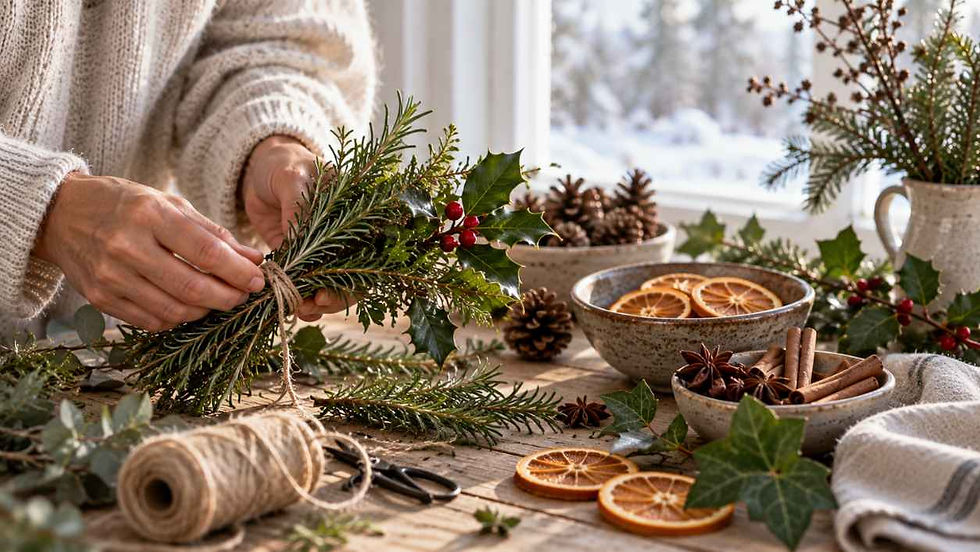
1. Pine and fir
Evergreen branches bring colour, texture and a clean resinous scent into the house. Use a few sprigs in a vase, tie them into a simple bundle or add a small piece to a winter simmer pot. If you gather your own, identify the plant confidently and avoid treated or sprayed material.
2. Holly
Holly is one of the most recognisable midwinter plants, with dark glossy leaves and bright berries. It works best as a decorative botanical rather than a simmer-pot ingredient. Keep berries away from children and pets.
3. Ivy
Ivy stays green through winter and drapes beautifully around wreaths and table arrangements. A little goes a long way, especially when combined with plainer evergreen branches.
4. Mistletoe
Mistletoe is strongly associated with midwinter and Christmas traditions. Use it decoratively and keep it out of reach of children and pets. It is not something to add to food, drink or simmer pots.
5. Rosemary
Rosemary is one of the most useful winter herbs because it is evergreen, aromatic and easy to find. Add fresh sprigs to simmer pots, use them in small wreaths or stand a few stems in water with pine and dried citrus.
6. Bay
Bay leaves have a subtler scent than rosemary but add a beautiful matte green shape to dried arrangements. They also work well in simmer pots when you want a more herbal, less sweet fragrance.
7. Orange
Orange is not a traditional northern evergreen, but it has become one of the most useful midwinter botanicals thanks to its bright colour and strong peel oils. Dry the slices for garlands and decorations, or save the peel for simmer pots and potpourri.
8. Cinnamon
Cinnamon brings warmth to winter scent blends and looks attractive bundled with dried orange or greenery. Use whole sticks for simmer pots and decorations rather than ground cinnamon, which can make simmer-pot water muddy.
9. Pinecones
Pinecones add shape and texture without adding much scent of their own. Use them naturally, combine them with evergreen and dried orange, or add a few drops of a suitable home-fragrance blend if you want more aroma. Keep scented decorations away from pets and small children.
How to use winter solstice botanicals at home
Make a small evergreen arrangement with pine, rosemary and dried orange.
Create a winter solstice simmer pot with orange, rosemary and cinnamon.
Tie rosemary and bay into small botanical bundles.
Use dried orange slices and pinecones in a simple table arrangement.
Make a restrained wreath using one evergreen base and just one or two accent materials.
A note on safe seasonal foraging
Only gather plants you can identify confidently, take small amounts where gathering is permitted and avoid material from roadsides or areas that may have been sprayed. Decorative plants are not automatically edible, and something suitable for a wreath may be completely unsuitable for a simmer pot.
Frequently asked questions
What plants are associated with the winter solstice?
Evergreen plants such as pine, fir, holly and ivy are strongly associated with midwinter, alongside modern seasonal favourites such as rosemary and orange.
What herbs can I use for winter solstice scent?
Rosemary and bay are easy, aromatic choices for simmer pots and natural home fragrance.
Can I put pine in a simmer pot?
A small amount of correctly identified, untreated pine or fir can be used for fragrance, but avoid unknown evergreen cuttings and never use yew.
What can I make with winter botanicals?
Wreaths, simple vase arrangements, garlands, botanical bundles, potpourri and simmer pots are all good options.
Do winter solstice plants have fixed meanings?
No. Associations differ between traditions, periods and modern practices, so it is better to treat symbolism as context rather than a strict rulebook.
Seasonal inspiration in your inbox
Get new recipes, botanical ideas and natural ways to make home feel warm and seasonal, from simmer pots and potpourri to herbal drinks and small seasonal rituals.


Comments